Raymond Douglas, MD, PhD

Globally-Renowned Doctor Specialized in Treating Thyroid Eye Disease (TED)

Have Questions?

Get in touch with us to learn more about your treatment options and next steps.

Step 1 of 2
Dr Raymond Douglas | Best Oculoplastic Surgeon Beverly Hills

Why Patients Choose Dr. Raymond Douglas

Raymond Douglas, MD, PhD, is a world-renowned, board-certified aesthetic and reconstructive oculoplastic surgeon in Beverly Hills, California. He specializes in aesthetic and reconstructive oculoplastic surgery as well as thyroid eye disease (TED) treatment and transformations. He is one of the lead scientists in the development of the only FDA approved treatment for TED (Tepezza) and has pioneered many techniques in aesthetic TED transformation.

  • Board-Certified Oculoplastic Surgeon
  • Over 15+ Years Experience
  • Accepts Most Insurance Plans
  • Non-Surgical Treatment Options

Read TED Patient Reviews

See Why Thyroid Eye Disease Patients Prefer Us

Awards and recognitions

Thyroid Eye Disease Causes, Symptoms & Treatment Options

Which TED Treatment is Right for You?

Thyroid eye disease, also known as a Graves’ disease-related eye condition, affects individuals differently, making specialized care essential. Seeking an expert in Graves’ disease treatment and bulging eye surgery is crucial for effective symptom management. Treatment options range from non-invasive therapies, such as Tepezza, to advanced eye surgery for bulging eyes to restore comfort and function. Each consultation includes a thorough evaluation to determine the best approach for stabilizing and improving eye health.

For some patients, bulging eye treatment with medication is sufficient, while others may require surgical intervention if symptoms persist or worsen. Minimally invasive bulging eye surgery can often reduce the need for extensive procedures, delivering excellent, natural-looking results. Addressing thyroid eye disease early improves outcomes, ensuring both functional and aesthetic benefits for patients seeking relief.

CAUSES OF THYROID EYE DISEASE

Thyroid eye disease(TED) is primarily caused by the overexpression of a receptor called IGF-1R, which helps regulate how cells function. In TED, this receptor becomes overactive in the tissues around the eyes, leading to increase scar tissue production. Years of research have shown that blocking this receptor can help return cell activity to normal. This discovery has led to new, effective treatments for TED.

cause of thyroid eye disease

COMMON SYMPTOMS OF TED

Some of the most common symptoms of thyroid eye disease include:

  • Inability to close your eyes completely
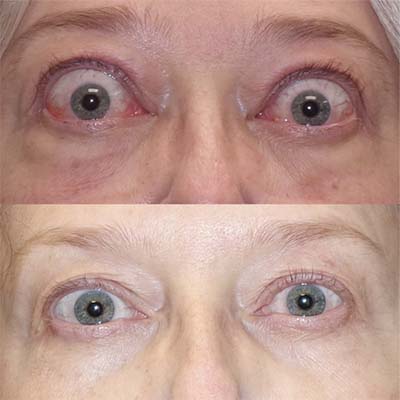
  • Bulging eyes
  • Double vision
  • Dry eye
  • Eye irritation
  • Redness and inflammation of the eyeball
  • Pressure behind or around the eyes
  • Swelling and redness of the eyelids
  • In rare cases, untreated thyroid eye disease can impact your vision and lead to vision loss

We Handle Everything So You Don't Have To

Our Patient Financial Navigation Support Team communicates directly with patients to schedule infusions, manage prior authorizations, and handles all aspects of billing and coding. The team enrolls patients in all eligible financial assistance programs and manages all insurance requests to resolve issues with claims or prior authorizations with minimal input from outside offices.

Yes. Most plans cover FDA-approved biologics used on-label. The main exceptions are catastrophic coverage or some HMOs.

• 1st course: 1 – 7 business days
• 2nd course: 15 – 45 days (longer if appeals are needed)
• Medicare: Typically less than 5 days (no prior authorization required)

Notify our team right away. We’ll recheck benefits, submit new authorizations, and apply for new copay assistance—so your care isn’t interrupted.

Thrive Health IV Clinic will:

  • File appeals
  • Request an Independent Medical Review (IMR)
  • File an appeal with your insurance, the Insurance Commissioner’s Department, or the Department of Labor
  • Request manufacturer bridge doses
  • Apply to foundation programs
  • Recommend alternative policies if needed

Yes!

  • Manufacturer rebate programs (commercial plans)
  • Foundation assistance (including travel)
  • 3 – 6 month repayment plans

GRAVES DISEASE & BULGING EYES EXPLAINED

Graves' eye disease

Graves’ disease is an autoimmune disorder that affects the thyroid and can lead to thyroid eye disease (TED), a condition that impacts the eyes. TED occurs when the immune system mistakenly attacks the tissues around the eyes, causing inflammation, swelling, and eye protrusion (bulging eyes). Other symptoms may include dryness, irritation, double vision, and difficulty closing the eyes. While TED progresses differently in each patient, understanding its connection to Graves’ disease is key to managing symptoms effectively.

bulging eye disease

Bulging eyes, also known as proptosis, occur when the eyes push forward due to underlying medical conditions, most commonly thyroid eye disease (TED). However, orbital tumors, infections, or other health issues can also cause the eyes to protrude. This condition can lead to eye strain, discomfort, exposure-related dryness, and vision problems. Identifying the cause of bulging eyes is essential in determining the right course of care and maintaining both eye function and appearance.

Graves' eye disease

Graves’ disease is an autoimmune disorder that affects the thyroid and can lead to thyroid eye disease (TED), a condition that impacts the eyes. TED occurs when the immune system mistakenly attacks the tissues around the eyes, causing inflammation, swelling, and eye protrusion (bulging eyes). Other symptoms may include dryness, irritation, double vision, and difficulty closing the eyes. While TED progresses differently in each patient, understanding its connection to Graves’ disease is key to managing symptoms effectively.

bulging eye disease

Bulging eyes, also known as proptosis, occur when the eyes push forward due to underlying medical conditions, most commonly thyroid eye disease (TED). However, orbital tumors, infections, or other health issues can also cause the eyes to protrude. This condition can lead to eye strain, discomfort, exposure-related dryness, and vision problems. Identifying the cause of bulging eyes is essential in determining the right course of care and maintaining both eye function and appearance.

Understanding How Tepezza Treats TED

Reversing Symptoms of Graves/Thyroid Eye Disease

Dr. Douglas and his team have been the leaders in all clinical trials using TEPEZZA, as well as instrumental collaborators in its scientific development. It is safe to say that no one has more experience administering TEPEZZA than Dr. Douglas!

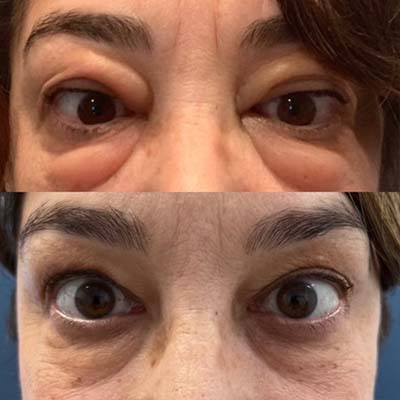
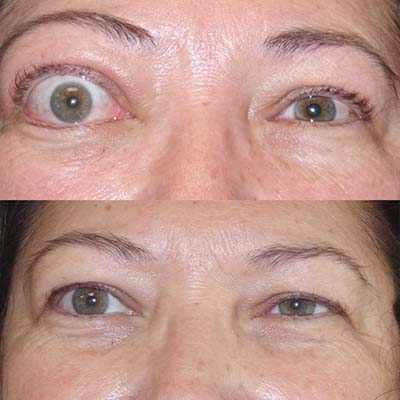
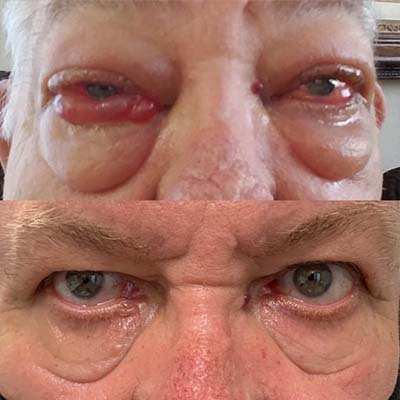
TEPEZZA addresses the physical signs and symptoms of Thyroid Eye Disease (TED) including reduction of proptosis (eye bulging), extra-ocular muscle size, mis-aligned eyes (strabismus), pain, redness, double vision and blurry vision. In many cases, TEPEZZA has demonstrated the ability to reverse TED almost entirely.

FAQs About Tepezza for TED

Common Patient Questions About Treatments

Thyroid eye disease can have a huge impact on your life, in every aspect from how you look to how you feel. Dr. Douglas has dedicated his career to improving the treatment options for thyroid eye disease patients, including clinical trials for Teprotumumab, the first medicine of its kind that may provide a therapy for avoiding complex surgery and preventing vision loss. Furthermore, he has written hundreds of peer-reviewed articles and the definitive textbook on the disease entitled “Thyroid Eye Disease.”

Symptoms of thyroid eye disease (TED) include:

  • Eye bulging
  • Eyelids that are open wider, creating a staring appearance 
  • Redness and swelling of the eyelids
  • Redness and swelling of the eye
  • Dry eye, eye irritation
  • Double vision
  • Eye pain, or pain around or behind the eyes
  • Rarely, vision changes and/or vision loss

Graves eye disease is also known as Graves’ ophthalmopathy (TO), and commonly interchanged with thyroid eye disease (TED) or thyroid ophthalmopathy (TO). It is when eye changes (as described in the symptoms of TED) occur in patients who often have underlying thyroid dysfunction, most commonly Graves’ Disease. 

TEPEZZA is the first FDA-approved therapy for Thyroid Eye Disease that is covered by insurance. Please contact our treatment center to have one of our experts guide you in navigating the insurance process. There are also several assistance programs available to those who qualify. We have a specialized care team to help make this treatment a reality!

A consultation is necessary to start treatment with TEPEZZA. If you do not live in the Los Angeles area, a virtual video consult may be appropriate. In fact, most patients were screened using video consultations. Please contact our treatment center to schedule an in-person or virtual consultation with Dr. Douglas.

Yes. In clinical trials, TEPEZZA has been shown to improve overall quality of life, decreasing eye bulging, pain and double vision. TEPEZZA may still benefit patients that have had previous surgeries on their eyes or thyroid.

Treatment options are varied and will depend on each individuals presentation and disease severity. Generally speaking, the following options are available:

  1. Supportive care – use of artificial tears and gels to help with dry eye and irritation. In some cases, patients may tape their lids closed at night to prevent their eyes drying out. 
  2. Medical management – as previously mentioned, Tepezza is the only FDA approved medical treatment for TED. In some specific situations, other treatments may be indicated such as systemic corticosteroids, though they do not reverse or alter the course of the disease. 
  3. Surgery – since the introduction of Tepezza, the need for surgery for TED has reduced dramatically. However, it may still be indicated for refining appearance, or for helping with patients who have refractory eye bulging or double vision after treatment. In rare cases (<5%), urgent surgery may be indicated if there is vision loss from active severe TED.
 

Dr. Douglas strives to provide those suffering from Thyroid Eye Disease with the most advanced and customized treatment plans so you can be you again. We understand that medical care and surgery can often be a financial burden. For this reason, Dr. Douglas accepts most PPO plans with out-of-network benefits. If your health insurance PPO plan has out-of-network benefits, then our team will do everything we can to work with your insurance company in order to help offset costs of any type of functional surgery you may require. Please keep in mind that with today’s insurance policies, coverage is very unpredictable and varies from plan to plan.

Thyroid Eye Disease is a complex condition and requires the expertise of an oculoplastic surgeon, like Dr. Douglas. In order to determine the treatment plan that will give you the results that are best for you, a consultation with Dr. Douglas is the first be required, as every patient is different and requires a customized approach. Once Dr. Douglas has determined your treatment plan, we can then review your insurance plan and determine how to move forward.

Please do not hesitate to call our office at (310) 363-8757 and ask to speak with our insurance specialist so we can answer any questions you may have.

If a treatment is medically necessary and indicated, it is often covered by insurance. However, all insurance plans are different so contact our insurance specialist if you have specific questions!

Explore Leading TED Research by Dr. Douglas

Learn About Thyroid Eye Disease, Tepezza & Other TED Innovations

Endocrine Society | Thyroid Eye Disease

Thyroid eye disease patients report maintained improvement 2 years after teprotumumab infusions

Mary Ann Liebert | Thyroid Eyes Treatment

A Prospective Study Examining Audiometry Outcomes Following Teprotumumab Treatment for Thyroid Eye Disease

New England Journal of Medicine | Thyroid Eyes Treatment

Teprotumumab for the Treatment of Active Thyroid Eye Disease

en_USEnglish